CASE STUDY: MARCH 2016 – MARCH 2019
Google Code Search & Developer Tools: Defining Enterprise Search, Debugging & Code Review Standards
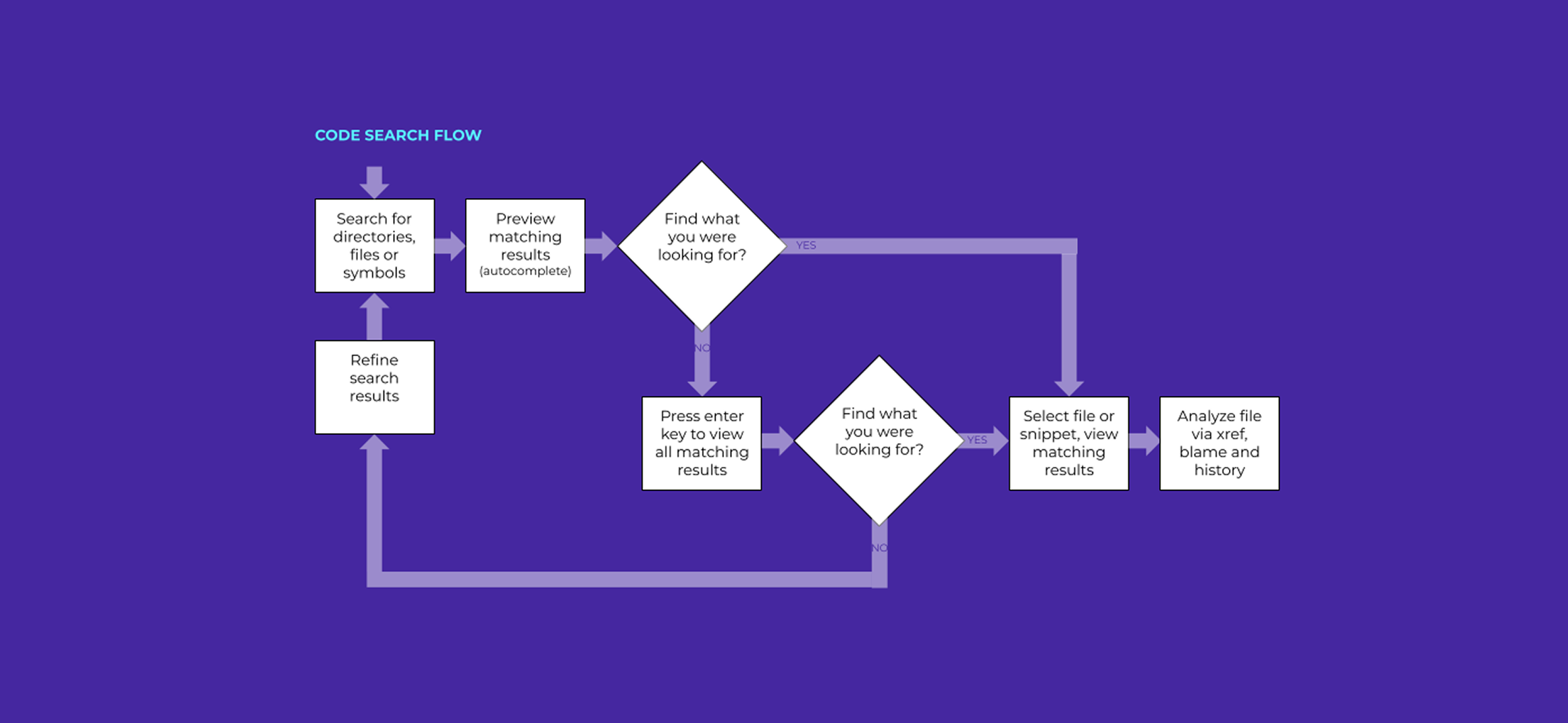
Enterprise Scale
70,000+ Daily Active Googlers
Maintained highest ranking satisfaction rating of all internal developer tools while spearheading massive Java GWT-to-Angular-Material migration.
Ecosystem Adoption
80,000+ Contributors
Expanded public OS code search instances for Chromium, Android, and TensorFlow while scaling CSR to 9,000+ active enterprise accounts.
Role & Scope
Staff UX Lead
Architected unified code search, live Borg cloud debugging, semantic Xref bunny trails, and up-front accessibility specs.
Overcoming workspace fragmentation, cross-reference navigation hurdles, and non-intrusive cloud debugging friction at massive scale.
Supporting 70,000+ daily active engineers across massive proprietary and open-source repositories demands flawless tooling. However, legacy Google Web Toolkit (GWT) interfaces created costly maintenance for engineering, severe workspace fragmentation, context loss during dependency navigation, and high friction for developers across code search and debugging workflows.
Executive Summary
"To modernize Google's developer infrastructure without disrupting 70,000+ engineers, we unified standalone code browsing, review, and debugging tools into a cohesive Angular Material environment—introducing stateful search, dependency bunny trails, and non-intrusive live cloud debugging."
As the first UX designer hired for the Developer UX team—which grew to 30+ designers within 3 years—I spearheaded several cross-functional design sprints in close collaboration with UX, engineering, and product management. Together, we defined the expansive scope of UX efforts and established the product roadmap across key platform verticals, including source code search (Google3, Git), code review (Critique, Gerrit, GitHub PRs), Cloud Build UI, and issue tracking.
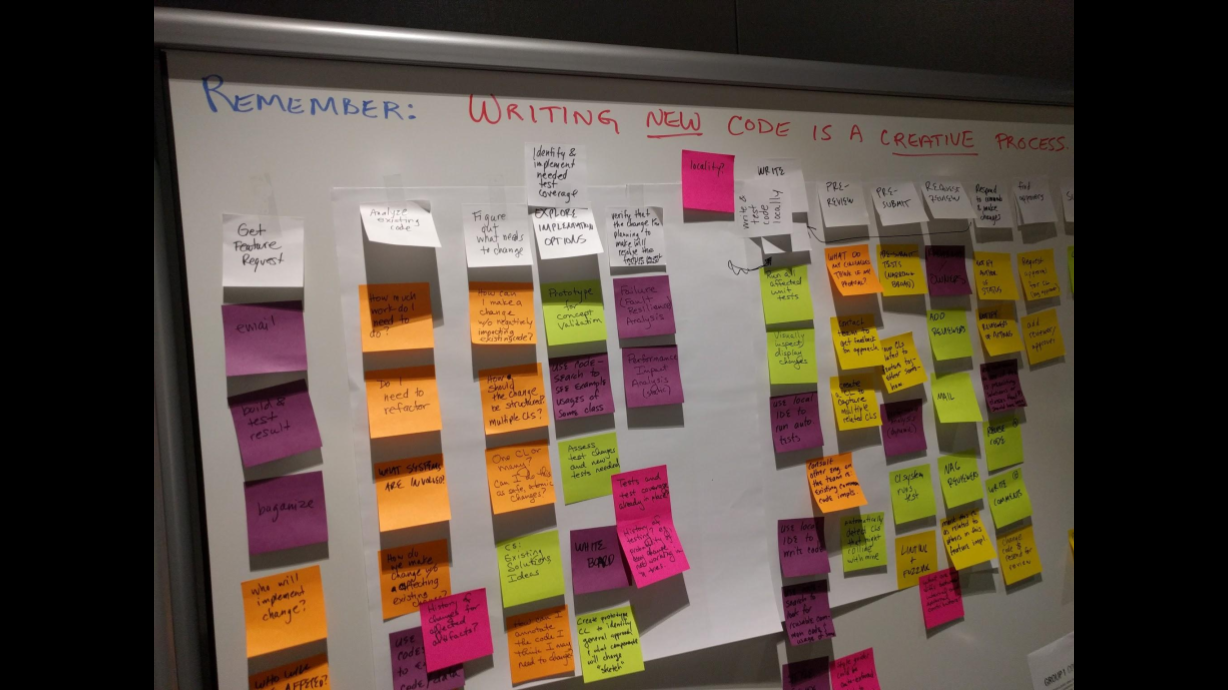
Developer UX Team Design Sprints & Scope Roadmap
Project Goals & Strategic Focus
Google Code Search & Source UX Goals
Unblock the massive Java GWT-to-Angular-Material frontend migration while not diminishing Googler's engineering productivity or happiness with their development workflow.
Reusable Cloud Source Management Framework
Design a unified, scalable code search and repository shell supporting internal Google3 developers, Cloud customers, Git-based acquisitions, and external open-source contributors to projects like Chrome & Android.
Real-Time Cloud Debugging
Unify Stackdriver and internal debuggers into Cloud Source Repositories, enabling non-intrusive live production snapshots and logpoints to eliminate tool-switching friction.
Semantic Cross-referencing & Code Navigation
Navigate resource constraints to implement dependency bunny trails and call graphs, allowing engineers to trace complex execution paths without losing context.
Up-Front Accessibility Specs
Pioneer accessibility specification processes as a 20% project, mapping screen-reader focus flows up-front to achieve a compliant accessibility rating.
Cross-Pillar DevOps Sprints
Orchestrate cross-functional design sprints and summits to unify developer toolchains, align competing priorities, and map future navigation frameworks.
Deconstructing workspace statefulness, dependency navigation trails, and non-visual code comprehension.
Extensive usability evaluations across internal and external engineering teams uncovered critical behavioral insights driving developer satisfaction.
"Statefulness" and Workspace Cohesion
Switching between code search, code review, and build systems introduced cognitive friction. Redesigning search bars to retain users' context and use more logical default behaviors based on users' context.
The "Bunny Trail" & Dependency Navigation
Engineers needed to backtrack across complex call hierarchies. Designing split-screen dependency trails with advanced regex filtering enabled deep exploration without polluting results with autogenerated code.
Reconciling Internal Source Control & Cloud Permissions
Mapping permission models for internal systems onto Google Cloud IAM created friction. Designing a streamlined approval model with automatic reviewer suggestions and Workspace onboarding unblocked adoption of Cloud Source Repositories.
Correcting Mental Models for Cloud Debugging
Engineers incorrectly assumed debuggers stopped live apps. Onboarding dialogs and inline code CTA triggers for non-intrusive production snapshots redefined cloud debugging as a safe, collaborative activity for applications running in production environments.
Harmonizing code search statefulness, semantic cross-referencing, and real-time cloud debugging across Google, Alphabet, Cloud and Google Opensource.
Structuring Use Cases ensured seamless code exploration, effortless version control, intuitive permission handling, and accessible non-visual code navigation.
"Statefulness" and Workspace Cohesion
Developers browse source code, review pull requests, and check CI pipelines while their working context—including search queries, scroll positions, and active panels—remains strictly preserved.
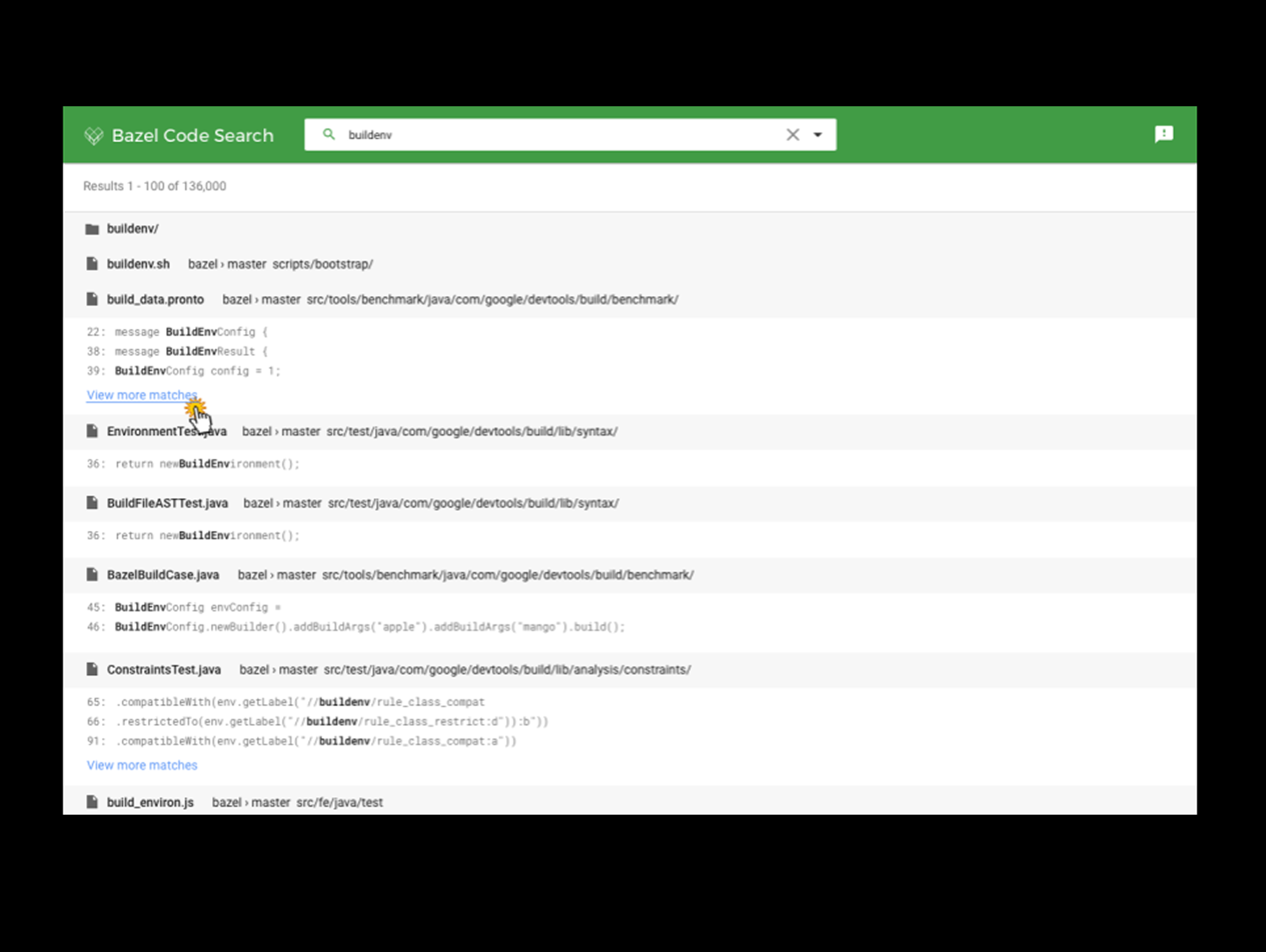
Dependency Navigation
Engineers trace complex execution paths across files using dependency navigation trails and split-screen definition peeks, filtering out autogenerated code and customizing query scope using advanced regex query controls .
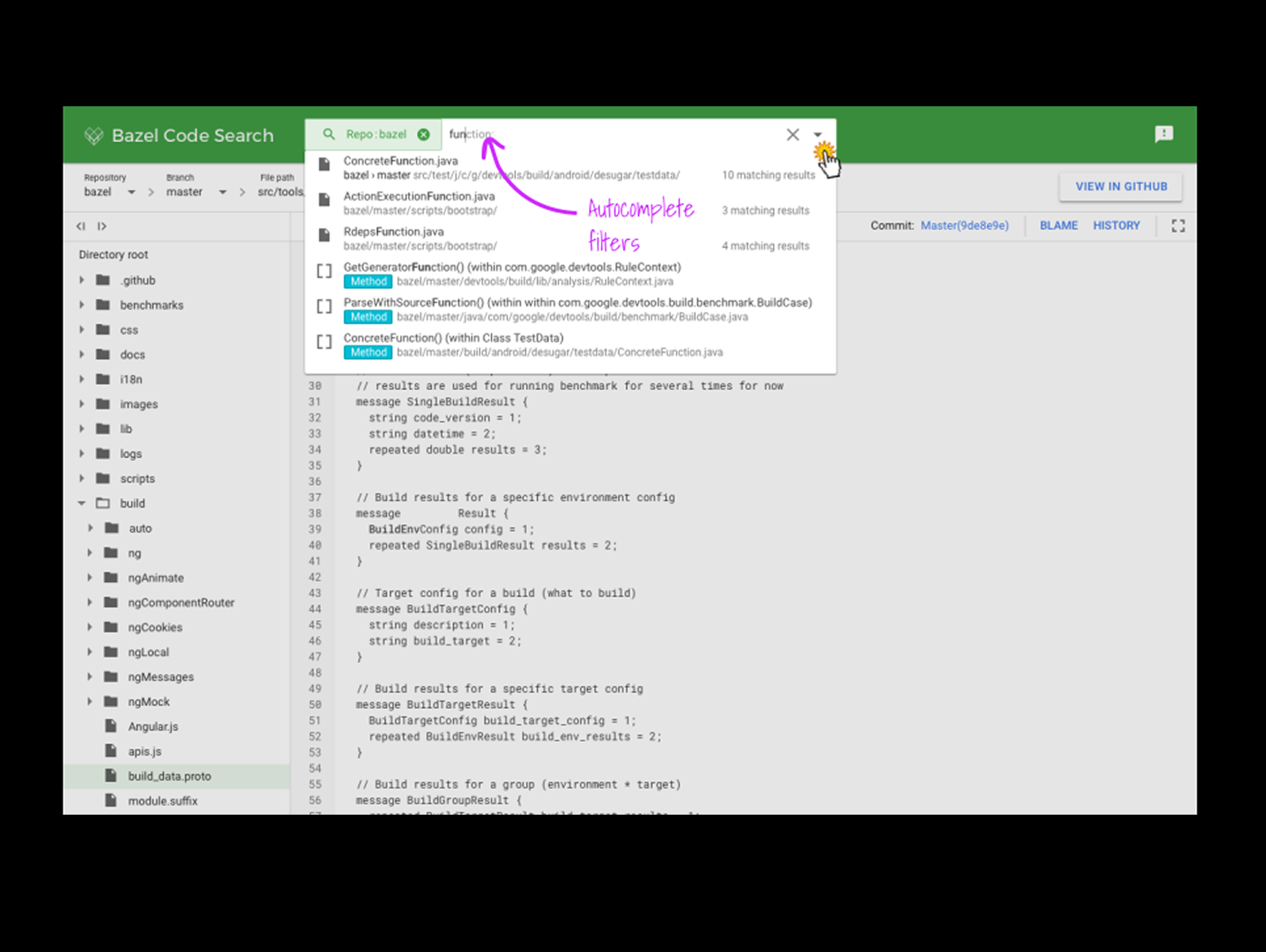
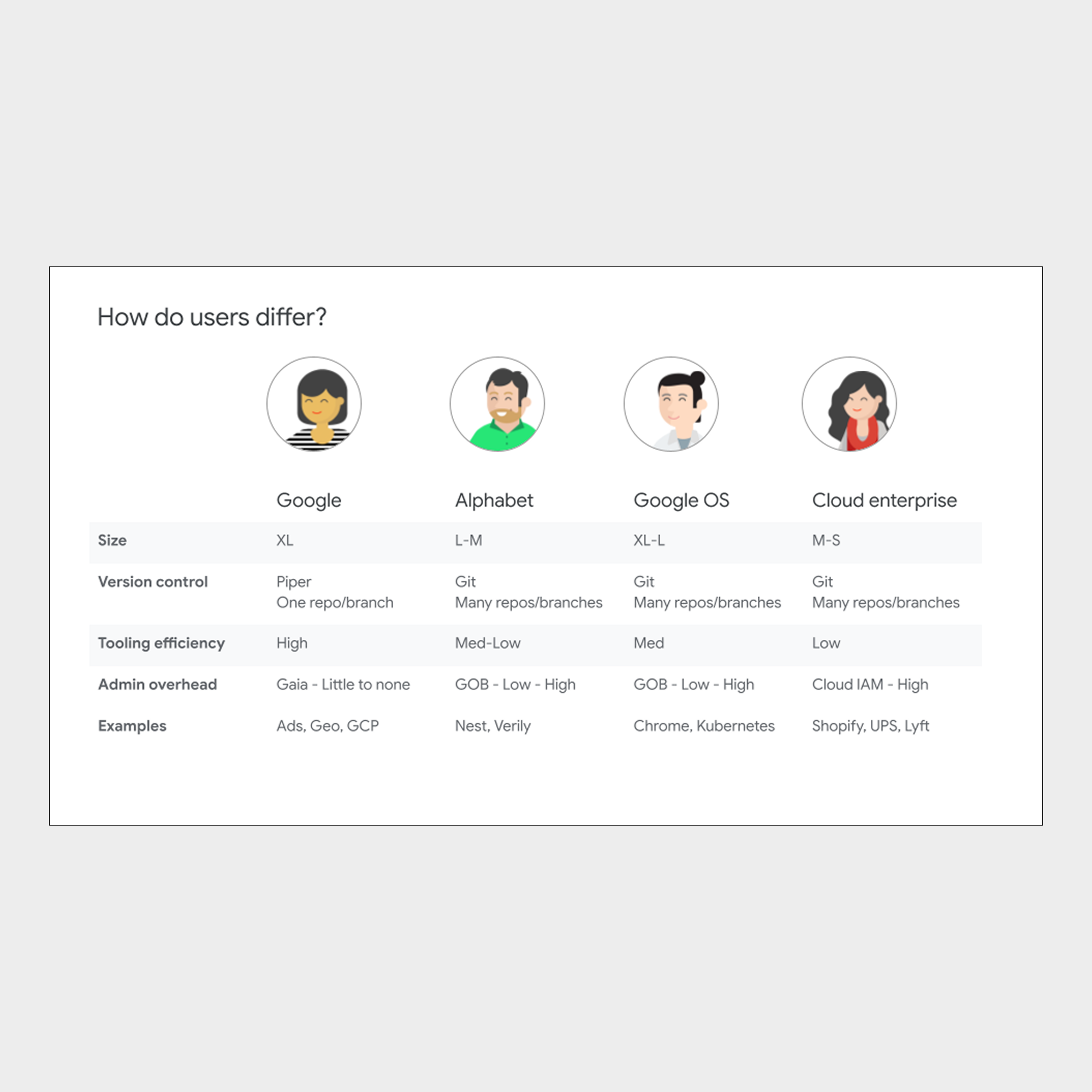
Reconciling Permissions Divergences across Google, Alphabet, Cloud and Open Source Cloud Repositories
Mapped divergences between access control systems. Internal systems used groups or custom review labels to control access while Google Cloud IAM relied on resource hierarchies with automated reviewer suggestions and Workspace group-based onboarding directly within the Google Cloud Console.
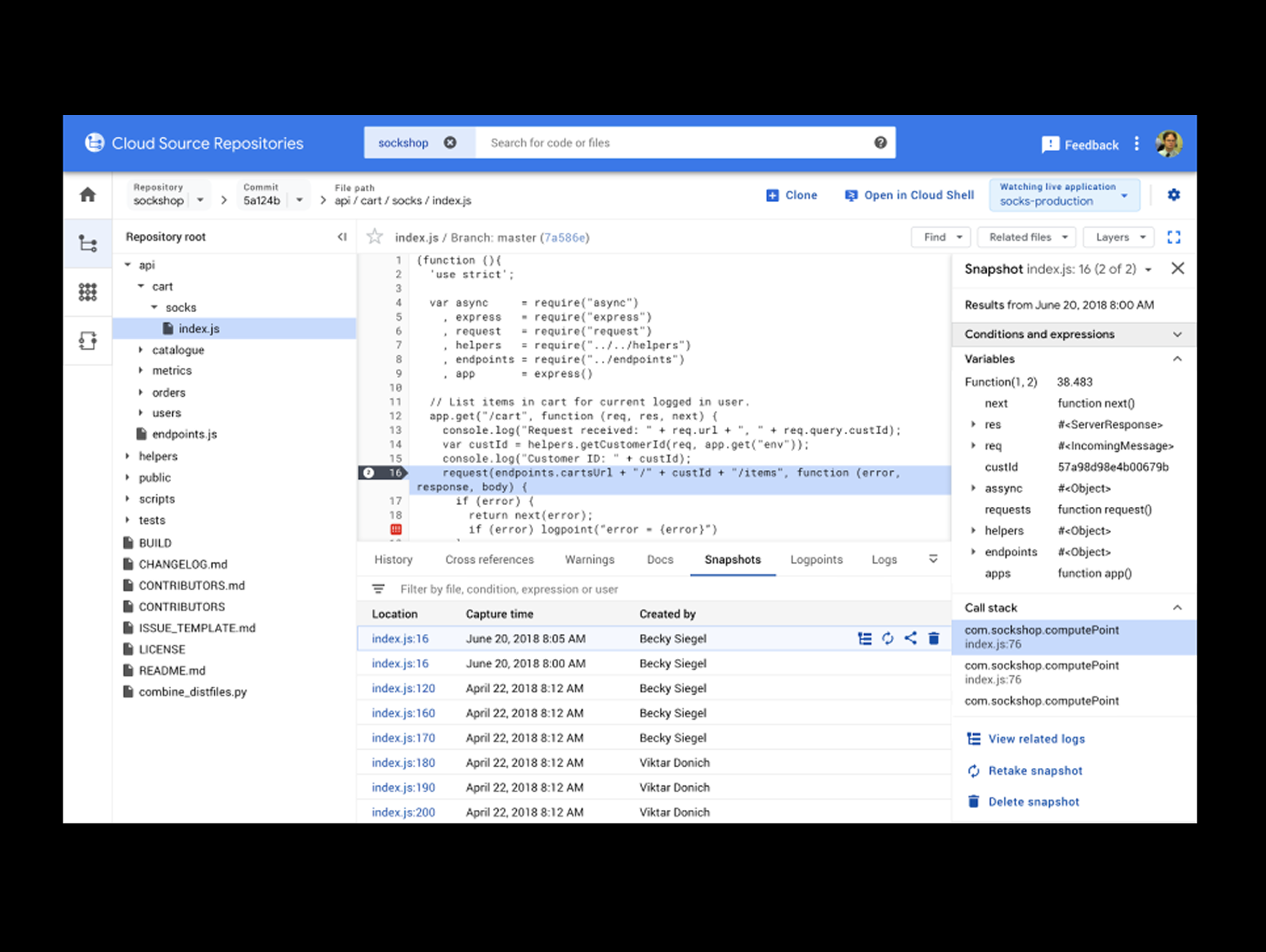
Correcting Mental Models for Cloud Debugging
Cloud Debugger enabled developers to capture live non-intrusive production snapshots and logpoints via inline code line CTAs without stopping running instances, enabling them to share debugging call stacks collaboratively across teams.
Designing for Non-Visual Code Comprehension
Blind and visually impaired software developers navigate logical code structures and diff hierarchies via keyboard-first shortcuts and optimized Accessibility Tree specifications.
Maintaining Engineer Productivity & Preventing Disruption
Redesigning Google3 Code Search and migrating its immense feature set from legacy Google Web Toolkit (GWT) to Angular Material 2 eliminated costly technical debt while maintaining uninterrupted daily productivity for over 70,000 daily active Google engineers.
Results
- Legacy GWT Deprecation Bottleneck Unblocked: Successfully modernized one of the last major internal applications holding up the retirement of legacy GWT infrastructure.
- Complete Angular Material 2 Rewrite: Spearheaded a comprehensive UX overhaul migrating complex code browsing features to Angular Material standards.
- Zero-Disruption Transition: Launched to 100% of Google in Q2 2020 while preserving peak productivity for 70,000+ daily active Googlers.
- #1 Internal Engineering Satisfaction Rating: Maintained the highest Engineering Satisfaction rating of any internal tool throughout the entire platform rewrite.
Expanding Strategic Value to External Git-based Developer Ecosystems
Bridged the version-control divide between internal monolithic Google3 repositories and external Git frameworks, enabling Alphabet-wide collaboration and adapting proprietary internal tools into public-facing Google Cloud Source Repositories.
Results
- Alphabet-Wide Collaboration: Radically improved development efficiency for Alphabet developers (Nest, Verily) via shared browsing, Xref, and change history views.
- Open Source Contribution Velocity: Deployed public search instances for Chromium, Android, and TensorFlow supporting 80,000+ active contributors.
- Cloud Source Repositories (CSR): Successfully productized internal code search into a public Google Cloud product unblocking enterprise Git workflows.
Impact on UX Metrics & Google's Bottom Line
By transforming a proprietary internal utility into a robust, secure external cloud product, the UX efforts transformed Code Search from an internal cost center into a core value-driver and high-satisfaction cloud platform.
Results
- Rapid Enterprise Adoption: Within months of beta launch, Cloud Source Repositories grew to scale over 9,000 active accounts with a 77% satisfaction rating.
- Unblocked Cloud Code Review: Spearheaded a code review design sprint launching Cloud Code Review to enterprise beta.
- Massive Maintenance Cost Reduction: Sunsetting legacy GWT frontends allowed infrastructure teams to retire redundant browser views and technical debt.
- Productizing Google's Secret Sauce: Transformed proprietary internal developer utilities into revenue-driving enterprise tools for Google Cloud.
Empowering the Next Generation of Cloud Development Workflows
The unification of Google Code Search, semantic cross-referencing, and live cloud debugging set an enduring standard for developer productivity—empowering 70,000+ internal engineers and 80,000+ open-source contributors globally.