CASE STUDY: MARCH 2019 – JAN 2023
Google Cloud Security Command Center: Defining Enterprise Threat Detection & Posture Governance
Enterprise Scale
10X ARR Run-Rate
Drove 10x revenue trajectory, onboarding 10,277+ cloud orgs and unlocking millions in deal blockers across IAM and cloud identity.
Noise Reduction
2.5M+ Findings Muted
Architected the query-based Mute capabilities enabling enterprise teams to create 400+ saved rules filtering out irrelevant noise.
Role & Scope
Staff UX Lead
Led cross-functional design across Security Command Center, Mandiant, Chronicle, and SOAR convergence while earning the gold-standard EU VPAT.
Overcoming severe alert fatigue, asset ownership chasms, and complex attack path vulnerability risks at global enterprise scale.
Securing multi-cloud enterprise infrastructure requires balancing comprehensive threat detection against cognitive overload. Security Command Center customers were inundated by hundreds of thousands of daily findings, struggling to identify true asset owners and map out attacker pathways to their critical resources.
Executive Summary
"To transform Google Cloud Security Command Center into a $100M+ ARR platform, we systematically eliminated alert fatigue with automation frameworks, elevated human-readable asset metadata, and empowered non-developers to build custom CEL threat detection modules."
Extensive research with major institutions revealed that analysts required clear blast-radius metadata and automated simulation models to map multi-step lateral movement toward their high-value data and resource nodes.
Project Goals & Strategic Focus
Findings Workflow & Ontology Redesign
Standardize finding details across diverse internal and external security finding providers, identifying key metadata fields to prioritize and triage findings such as Cloud Asset Inventory attributes, logs and security tags defined by SecOps admins.
The Security Finding Mute Feature Framework
Enable customers to establish and save conditions under which specific low-priority findings are automatically hidden from active triage.
Multi-cloud Coverage & Acquisition Convergence
Orchestrate product convergence between Security Command Center, Mandiant, Chronicle, and SOAR, integrating Attack Path Simulation and risk scoring.
Custom Threat & Vulnerability Detection
Empower analysts to build custom detection logic using intuitive CEL expressions for SHA and ETD without requiring specialized developer code.
Deconstructing enterprise alert overload, asset identification barriers, and custom threat logic.
Deep customer research across banking, automotive, and technology enterprises uncovered four fundamental truths shaping enterprise cloud security operations.
Severe Alert Fatigue & The "Mute" Imperative
Customers flooded by thousands of daily notifications demanded query-based automatoin rules. To respect production SLAs and prevent unexpected outages, teams required manual-trigger playbooks and dry-run simulations rather than unguided autonomous remediation.
The Complex "Asset Ownership" Chasm
Identifying true asset owners was the #1 barrier to remediation. Surfacing Tags, Labels, and human-readable project names directly in query tables coupled with one-click "Share with Owner" ticketing automation bridged the organizational gap.
Attack Path Visualization vs. Disjointed Findings
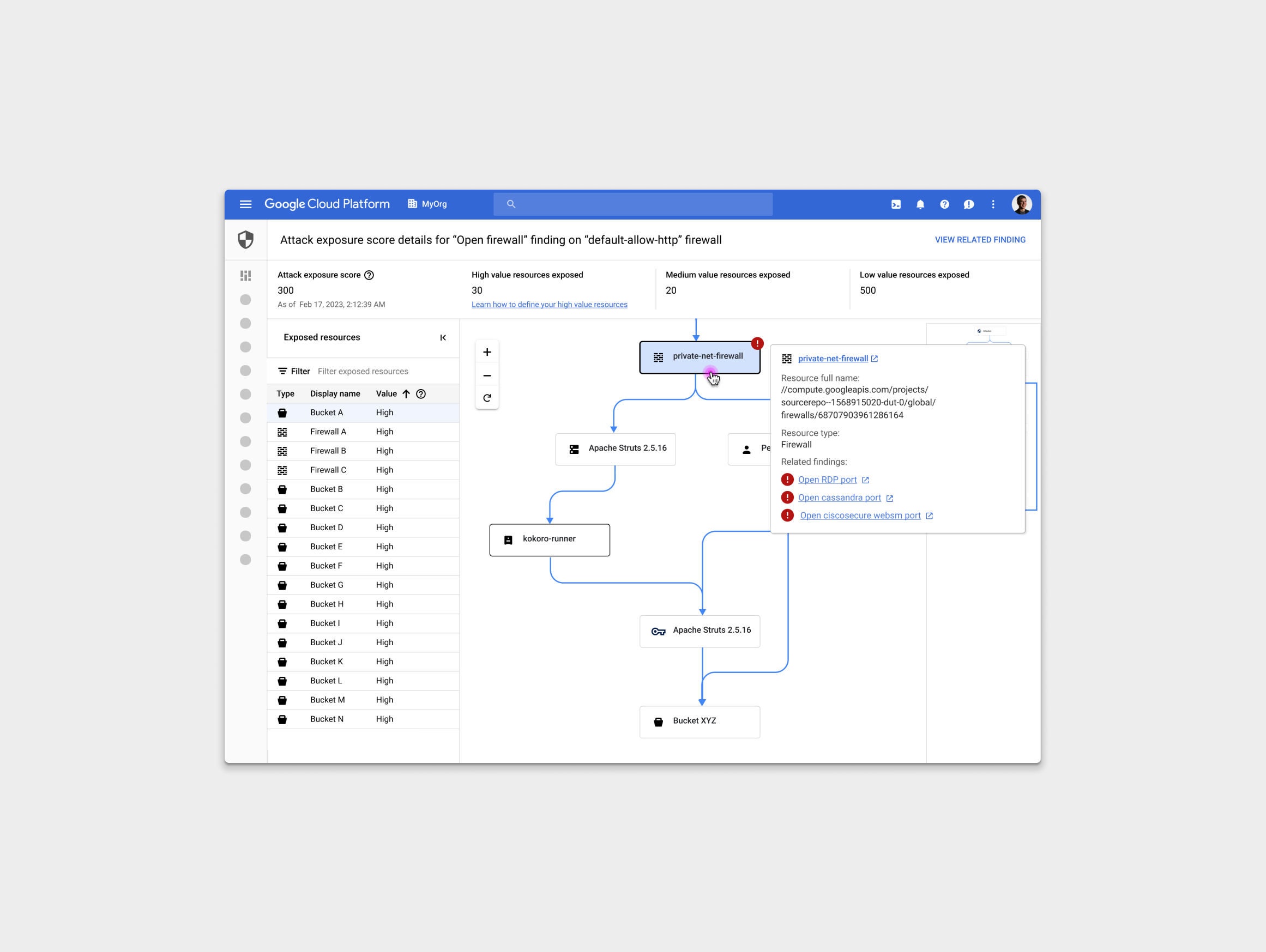
Security analysts struggle to understand how individual vulnerabilities relate to each other. By modeling attack paths, Security Command Center connects isolated vulnerabilities, IAM permissions, and network routes into a visual graph showing exactly how an attacker could move laterally to reach critical assets.
"Blast Radius" Context Over Default Severity
Default static severities often misrepresent actual business risk. Elevating contextual metadata—such as data sensitivity, network exposure, and lateral IAM movement—enabled teams to filter and evaluate findings by true blast radius.
Harmonizing posture vulnerability triage, real-time threat response, and automated muting workflows.
Defining structured Use Cases empowered security administrators, threat analysts, and operators to seamlessly scope vulnerabilities, mute noise, and simulate and remediate lateral attack paths.
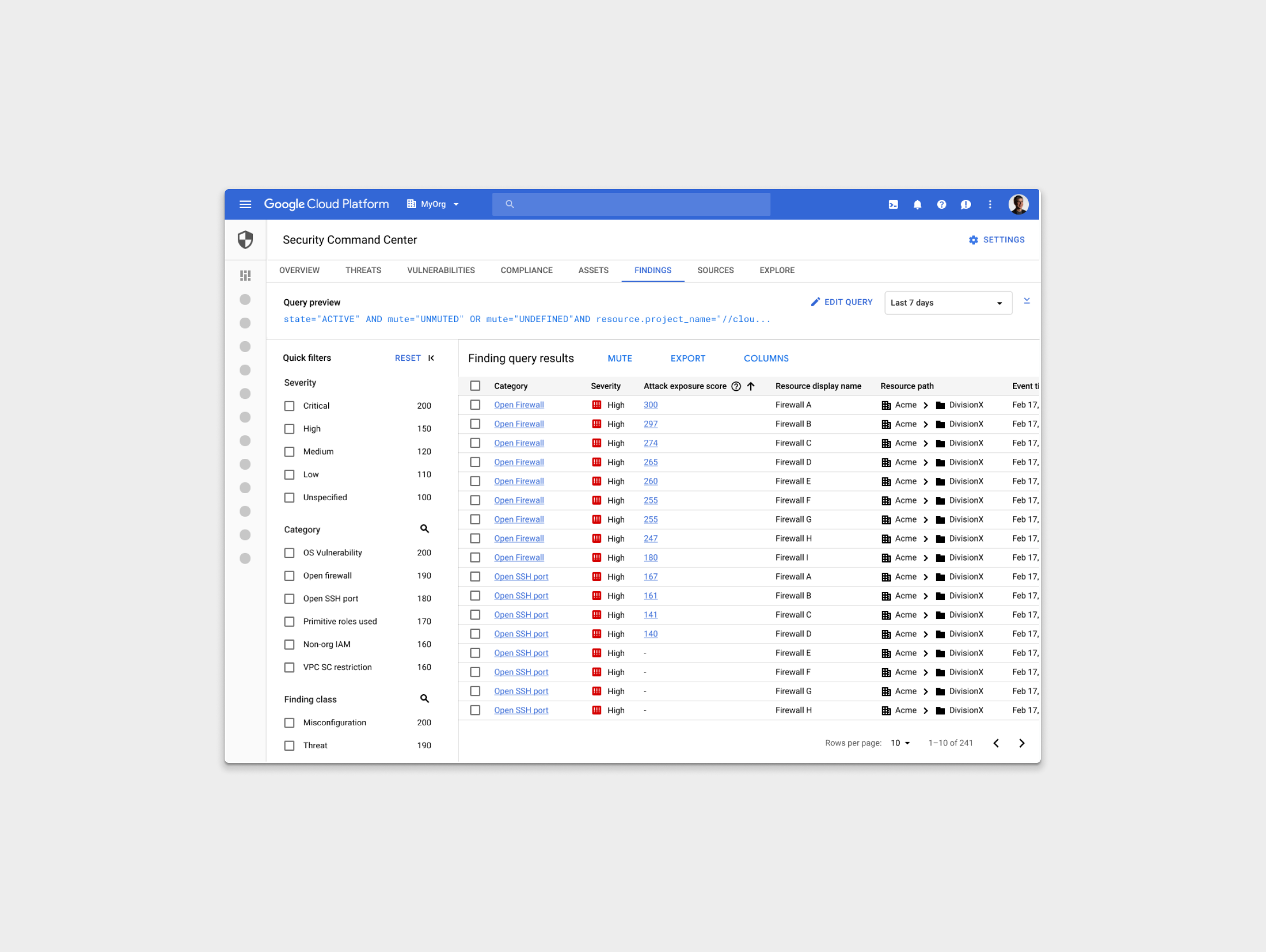
Scoping, Segmenting, and Filtering Posture Vulnerabilities
Security admins filter down large volumes of postural findings based on severity, folder scope, or organizational tags to evaluate compliance ratings against industry standards (CIS, NIST, PCI) and assign fixes to asset owners.
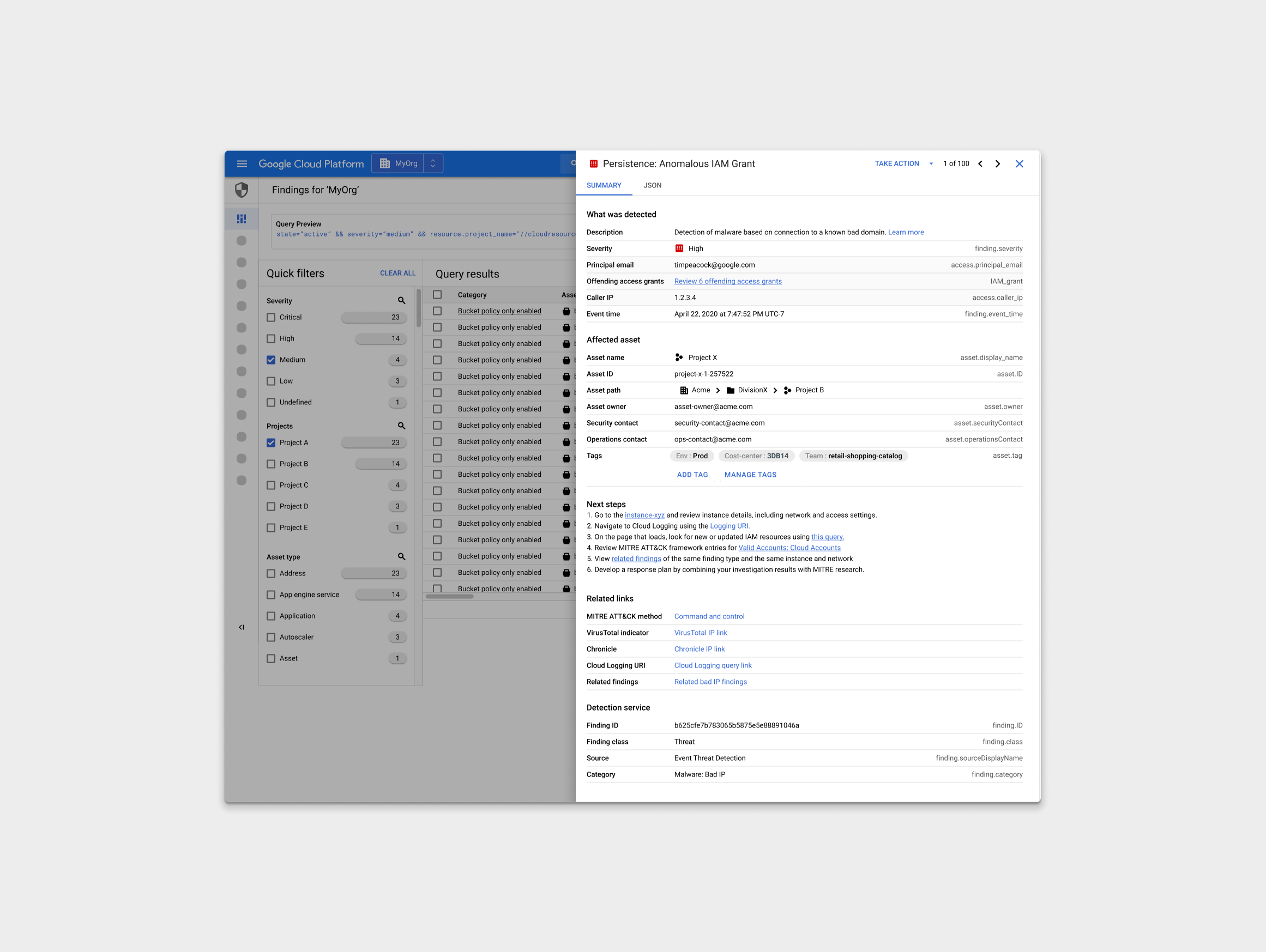
Prioritizing and Responding to Active Threat Activity
Threat analysts drill down into specific threat indicators—such as anomalous IAM grants or malicious script execution—filtering by principals, target IPs, domains, or MITRE ATT&CK tactics in real time.
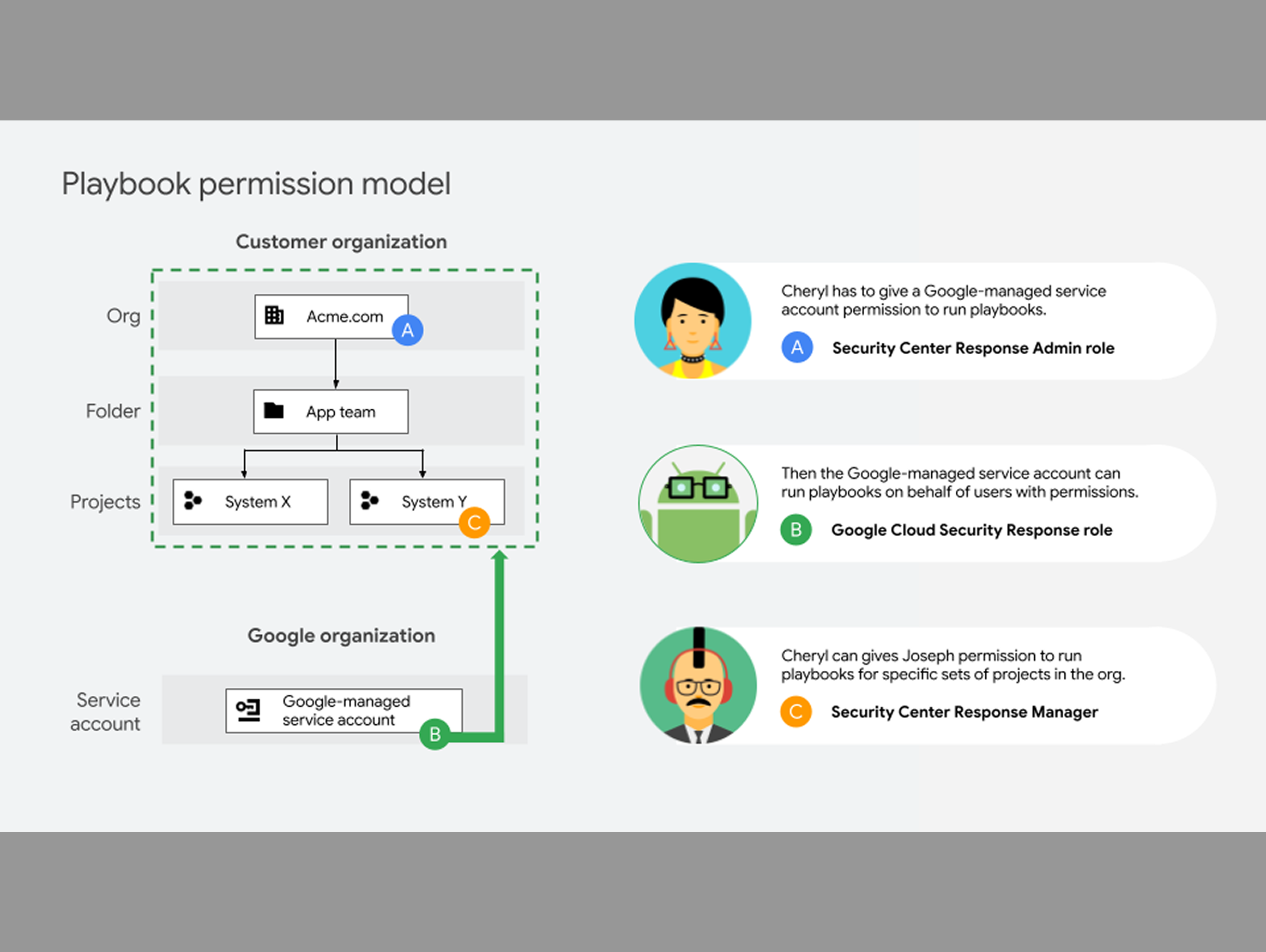
Automating Triage via Automated Rules
Security operators convert precise query-based filters into permanent automated rules, automatically suppressing or remediating future low-risk or approved alerts so analysts can focus exclusively on novel security events.
Simulating and Remediating Lateral Attack Paths
Security operators simulate and visualize lateral attack paths to identify vulnerabilities, network exposure, and over-privileged service accounts leading to high-value assets, allowing them to proactively shut down transit points.
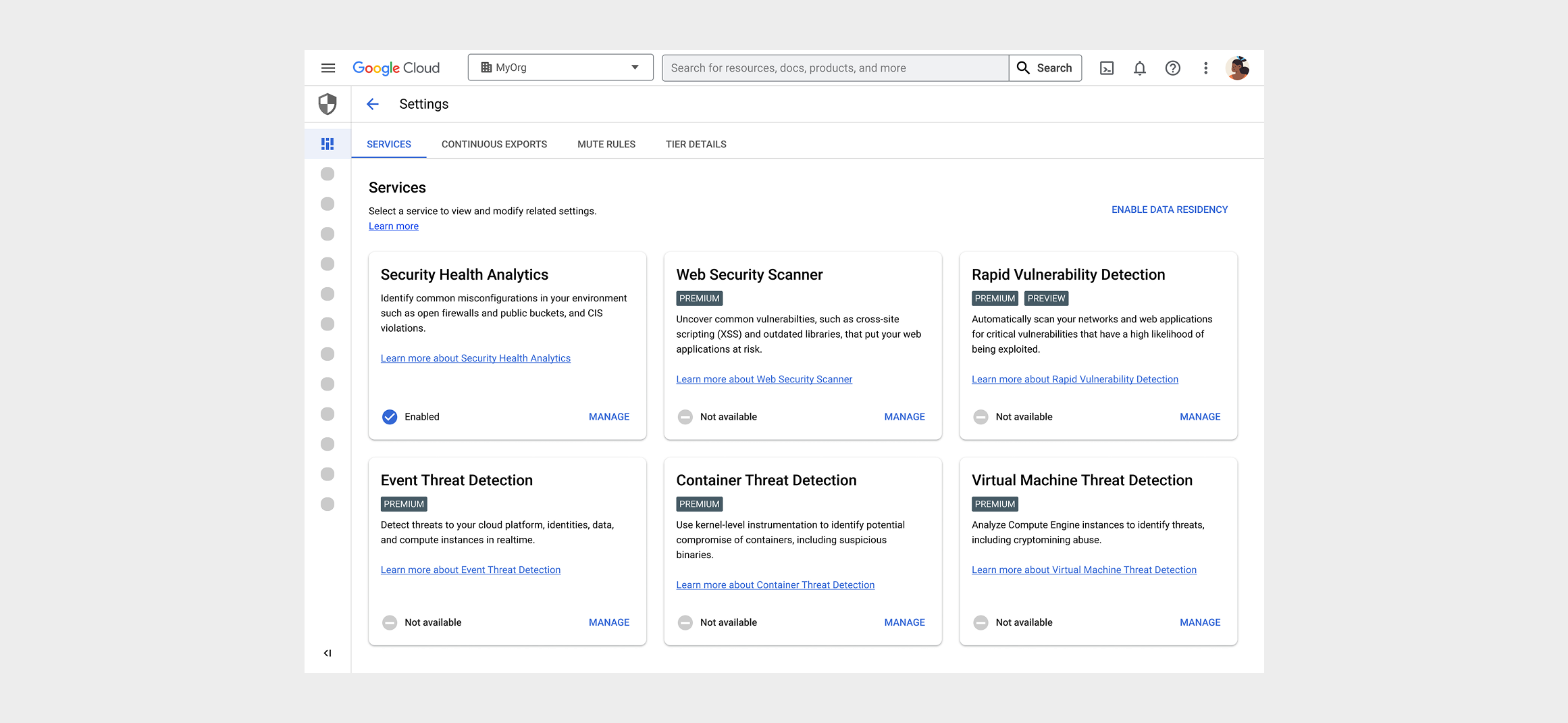
Self-Serve Billing Onboarding and Tier Coverage Management
Org owners view at a glance which folders and projects have detector services enabled or inherited, performing bulk operations across thousands of active projects without billing conflicts.
Helping Developers and Teams Stay Secure
Prior to design intervention, enterprise customers were overwhelmed by hundreds of thousands of daily alerts. By standardizing the presentation of finding metadata across all diverse source teams into a unified finding details template, the design allowed users to instantly identify key threat fields, simulate attack paths, and configure custom CEL detection logic.
Results
- Standardizing High-Volume Alerts: Unified finding details templates allowed users to instantly pinpoint key threat fields across all diverse source providers.
- Preventative Attack Path Simulation: Integrated Attack Path Simulation and Asset Exposure risk scoring to catch vulnerabilities early.
- Actionable Sandbox Remediation: Surfaced raw logs, asset histories, and direct documentation inline to empower developer resolution.
- Custom CEL Module Builder: Empowered non-developers to configure custom SHA and ETD detection logic using intuitive Common Expression Language rules.
- Orchestrated Automated Playbooks: Established automated remediation guardrails with customizable grace periods to prevent unexpected production outages.
Impact on UX Metrics and Engagement
The systematic restructuring of Security Command Center operations dramatically improved platform usability, unblocked large-scale billing onboarding across thousands of cloud organizations, and established accessible design benchmarks.
Results
- Mitigating Alert Fatigue: Enterprise customers created 400+ saved mute configurations, automatically suppressing over 2.5 million irrelevant findings.
- Inline Information Architecture: Surfaced up to 60% of necessary triage information inline on summary pages, ending raw JSON dependency.
- Massive Onboarding Scale: Scaled platform coverage to over 10,000 cloud organizations.
- Gold-Standard Accessibility: Rewrote core navigation trees and screen-reader interactions to secure a well-regarded EU VPAT in April 2023.
Impact on Google's Bottom Line
Designing the end-to-end UX strategy for Security Command Center from inception directly accelerated Google Cloud's security business trajectory, unlocking major enterprise lands and unblocking billions in public sector procurement opportunities.
Results
- Exponential Revenue Growth: Drove a 10x growth trajectory, scaling Security Command Center to achieve annual revenue run-rate targets by 2023.
- Securing Recurring Business: Landed increases in ARR and millions in bookings.
- Unblocking billions in Public Sector Pipeline: Earning the gold-standard EU VPAT unblocked billions in stalled government procurement sales.
Empowering the Next Generation of Cloud Security Operations
The evolution of Google Cloud Security Command Center established a new benchmark for enterprise CNAPP design—eliminating alert overload for thousands of organizations while driving over $100M in annual platform revenue.